Key takeaways
- What drives the best acquisition outcomes?
The best acquisition outcomes happen when the buyer's operating model aligns with what the seller wants for their business, people and legacy. - Is choosing the highest valuation always the best option?
No. Choosing the right buyer is about more than valuation. It is about finding a long-term partner that can help the business continue to grow after close. - Why does deep industry expertise matter in an acquisition?
Buyers who understand your customers, market and challenges can often provide - How are the strongest acquisition relationships built?
The strongest acquisition relationships are usually developed over years of conversations rather than during a single transaction process. - What are the benefits of long-term ownership?
Long-term ownership enables businesses to preserve their legacy while benefiting from shared expertise, leadership development and continuous improvement.
Topics
Show notes
Why Does the Right Buyer Matter More Than the Purchase Price?
Troy O'Connor opens the conversation by sharing experiences from two very different acquisitions and explains why the buyer behind a deal can have a greater impact than the transaction itself. While valuation often dominates discussions, the long-term success of a business depends on who is responsible for guiding it after the sale is complete.
What Founders Really Care About When They Exit
For many founders, selling a company is about more than achieving a financial outcome. Rob Hallett discusses how legacy often plays a significant role in the decision-making process, with founders wanting confidence that their employees, customers, culture, and brand will continue to thrive long after they step away from the business.
How Sellers Can Spot the Difference Between Buyers
Every acquisition process starts with diligence, financial analysis, and data requests, but the real differences emerge when sellers begin asking questions. Understanding a buyer's vision for the company, their level of industry expertise, and how they plan to support growth can quickly reveal whether they are a long-term strategic partner or simply a source of capital.
Why Does Industry and Domain Expertise Matter?
Enterprise Asset Management is a highly specialized industry that serves complex, mission-critical operations. Troy explains why buyers who understand EAM,customer challenges, competitive dynamics, and industry-specific sales models are often better positioned to help businesses succeed than investors who approach software acquisitions from a generalist perspective.
How Does Long-Term Ownership Change the Equation?
The discussion explores how a permanent ownership model allows leaders to focus on sustainable growth instead of preparing for the next transaction. Rather than optimizing for a future exit, businesses can invest in people, products, customer relationships, and long-term strategic initiatives that compound value over time.
Why Do Many Acquisition Relationships Begin Years Before a Deal Closes?
Successful acquisitions rarely happen between strangers. Troy shares how many acquisition conversations develop over several years, giving both buyers and sellers the opportunity to understand each other's goals, operating philosophies, and cultural fit before entering a formal process. Those relationships often create stronger alignment and better outcomes after closing.
What Actually Changes After an Acquisition?
One of the most common questions sellers ask is what happens after the deal is complete. The episode explores how access to operating frameworks, leadership development programs, best practices, and industry knowledge can help businesses improve performance, accelerate learning, and unlock new growth opportunities following an acquisition.
The Power of Shared Learning Across a Portfolio
Both Troy and Rob describe the value of bringing leaders together from across multiple businesses. Through events, peer networks, and collaboration opportunities, leaders can learn from one another's successes and mistakes, helping them solve challenges faster and make more informed decisions as they grow their companies.
How AI is Creating New Opportunities for Growth
Artificial intelligence is reshaping the software industry, and the episode explores how organizations can benefit when ideas, experiments, and successful use cases are shared across an entire portfolio. From product innovation to operational efficiency, AI is becoming an increasingly important driver of growth and competitive advantage.
Supporting Businesses at Every Stage of Maturity
Whether an acquired company is already high-performing or still developing its operational capabilities, there is always room for improvement. Troy and Rob share examples of how benchmarking, leadership development, industry expertise, and shared best practices can help businesses refine operations, strengthen market positioning, and accelerate innovation.
Questions Every Seller Should Ask Before Signing a Deal
Before selecting a buyer, sellers should ask questions about industry expertise, long-term strategy, leadership support and growth plans. Those discussions often reveal far more about life after acquisition than valuation alone.
The Big Takeaway: Alignment Drives Long-Term Success
The episode concludes with a simple but important message: the best acquisition outcomes come from alignment. Sellers who understand their goals and take the time to evaluate potential buyers based on more than purchase price are more likely to find a partner capable of supporting their people, customers, business, and legacy for years to come.
Transcript
Troy O'Connor (00:00)
Do they really know your business? Are they really able to help you or is this gonna be something that is just purely transactional and post close, now you're in a world of pain?
Lynne Salmon (00:22)
At some point, every founder asks the same question. What happens to my business when I'm no longer the one running it? Who takes it forward? And did I choose the right buyer? Omegro is a specialist acquirer and long-term operator of enterprise asset management software businesses. And this is the Omegro Effect, a podcast for founders, CEOs, and business leaders navigating exits, carve outs, and what comes next. We explore what really happens after the deal is done. By buyer fit compounds, and how the right ownership model shapes long-term outcomes. Because what happens after the deal is what defines it. To help us unpack this and more, I'm joined today by Omegro CEO, Troy O'Connor, and Rob Hallett, group leader and former CEO of AssetWorks. Troy, Rob, great to have you both here.
Troy O'Connor (01:10)
Thanks, Lynne. Pleasure to be here.
Rob Hallett (01:10)
Yeah. Yeah. Thanks for having me.
Troy O'Connor (01:12)
on the on the first Omegro podcast. It should be fun.
Lynne Salmon (01:16)
It's great to have you both here. Let's start by telling our listeners a little bit about yourselves. Troy, perhaps we can start with you.
Troy O'Connor (01:24)
Yeah, sure. I guess I've been in the software industry for some twenty-five years. Started in consulting, worked at Accenture. I've been a founder. So I was the founder of a business that was exited in 2013. I've been the CEO of a business that was acquired, which was SmartTrack. that business was acquired by Constellation, which is how I joined. That was in 2017. I've progressed through Constellation and today sit as the CEO of Omegro portfolio focused on enterprise asset management. So we're a fairly sizable, fairly international portfolio and very acquisitive. But yeah, here to share our experiences and looking forward to the chat. Rob, how about yourself?
Rob Hallett (02:07)
Yeah, so kind of a similar background. I been in the industry about twenty three years and I came to Omegro as part of a acquisition in two thousand eight and kind of grew up with the organization. started out as a project manager, worked my way up through the organization until I was CEO of that business for a number of years, and then moved into a group role, working for you and a number of others in the the group level.
Lynne Salmon (02:38)
You've both been in the business with some deep expertise for a while now, so really looking forward to our conversation today. Let's start by asking a somewhat obvious question. And Troy, let's start with you. If I'm a seller going through a process right now, does it really matter who buys my business?
Troy O'Connor (02:54)
Well, yeah, I would I would like to think so. as I mentioned, I've been on the sell side twice actually. and I can say honestly from a personal experience, very different outcomes. So one was a very positive experience, which was clearly the constellation acquisition of Smart Track. I'm still here some nearly ten years later. but the business I founded was a the acquisition was very different. it wasn't such a positive experience. And so I can say personally that yeah, the buyer matters.
When I reflect on that and I look at the market today, there's no shortage of acquirers, right? Constellation was probably the first that did permanent capital and we've been doing it for 30 years, but there's no shortage of permanent capital acquirers in market. So I guess you've got to ask yourself as a seller, what is it that you're looking for? I think what we see, you know, when we see really successful acquisitions and successful processes, there's a really nice alignment between the acquirer and their value proposition, how they can help a business and what the seller is looking for. in our world we think about domain expertise as being incredibly important. there's as I said, there's no shortage of software acquirers, but do they really understand enterprise asset management? Do they really understand your business? Do they really understand how your customers think, what the technology what problems the technology solves?
You know, and so that connection that that's more than just superficial. It's you know, it's not just a transactional relationship. It's not just hey, we've got some money, we can help you out. It's a you know, we've got a deep understanding of your world. we've got best practices that we can help your business improve we've got talent management programs to help your team get better. And ultimately all of that comes together into a an acquisition that that that stands the test of time. So, you know, I think it does matter and I think in today's world, sellers should be excited about the opportunities and the shortage of ways to sell your business, but I think they should be quite selective as well. So that's how I think of it. That's how I would position it to anybody that's in market. Rob, I'd throw it over to you. You're a part of a process some many years ago, but I mean, what's your journey been?
Rob Hallett (04:55)
Yeah. no, I totally agree. I think it's what the seller is trying to accomplish, and I think one common thread that I've seen with the acquisitions I've been involved in and been kind of adjacent to is a lot of founders, most founders, whether they've started the business thirty years ago or if they, you know, the self described serial entrepreneur, person, I think that you know, leaving a legacy. Leaving something to carry on after their involvement is you know hypercritical to those folks. And that they have people they've worked with and they have a product, they have a presence in the market, that legacy of a name and a brand. And I think, you know, depending on the buyer, that will sustain going forward and sometimes not so much. So it's what does that seller really want? For that business, post acquisition.
Troy O'Connor (05:46)
I think that's really interesting, Rob. We you know, obviously part of our value proposition we've never ever sold a business, right? So, if you're acquired by us, it's absolutely in perpetuity. You know, as a founder and I've been a founder, it sort of enables that long term thinking. it's not just about, hey, where am I gonna be in three years when this business is gonna be sold again? It's creating an environment for my team that can think long term. You know, they've got a home for life, the brand is going to continue, the culture will remain the same, and we can develop the business and the people within it over a long period of time. And, that's it was certainly important to me, you know, when Smartrak was acquired. And again, I agree with you a hundred percent that for most founders that legacy is really important, not just for themselves and but for their people, right? And making sure they're going to a home that is going to help the business and themselves develop.
Rob Hallett (06:38)
Yeah, yeah. And I would add that, for those founders that you know are looking for a partner to take the business to the next level and the next level after that. That's where a permanent capital kind of environment is really helpful.
Troy O'Connor (06:53)
Yeah, for sure.
Lynne Salmon (06:55)
So when during the process do you think these differences in the type of buyers starts to become clear for a seller?
Troy O'Connor (07:06)
Yeah, I mean I think it's it can vary, Lynne, to be honest. It depends on the process itself. But it's generally speaking, early, I would say. You know most acquirers will operate very similar at the get go. So there's a certain amount of data that you need to assess a business and how it's operating and what it looks like and that then, translates into value. But it's at that point where sellers, you know, can start asking some difficult questions about what's the plan, how can you help me, what should I expect post closing? And I think that's where you start to flesh out whether the acquirer actually knows the industry. You know, are they, do they know your competition? Do they know what your customers look like? Do they know what long sales cycles look like? you know, are they familiar with your pricing constructs?
You know, all of those things really start to play out, you know, and you know, if a if an acquirer is familiar with low ticket SaaS businesses that have high churn and short sales cycles and you're in EAM, which is a you know, two year sales cycle, potentially has hardware, it's gotta be installed, it's got different pricing constructs. Do they really know your business? Are they really able to help you or is this gonna be something that is just purely transactional and post close, now you're in a world of pain?
So I think it's in that stage. You know, obviously the starting point's probably very similar, but you know, as you start to progress through a process and narrow down to a short list and start asking more difficult questions of acquirers that it will become more probably more obvious who understands your business and who doesn't.
Lynne Salmon (08:39)
Does the type of seller vary in terms of when they recognize that as well? Like if you're talking to a founder compared to a professional CEO or, you know, a business leader within a large corporate seeking to carve out a piece of the business, like do they all have different recognition sort of points?
Troy O'Connor (09:00)
Yeah, different sellers are looking for different things, right? So you know, most commonly we're talking to founders and those founders as Rob pointed out are really interested in legacy, you know, how we can help develop the business, grow the business, how can we help develop talent and how do we think long term. But equally, you know, we've done take privates from public companies, we've done corporate carve outs from strategic, you know, larger, more strategic companies. And those motivations are different, you know, it's okay, I need an acquirer that's experienced, I need this to be done swiftly. I need to make sure my customers will be maintained. You know, they're different value propositions. So you know we do have that experience and we do bring that to the table. And, you know, it's for us it's about connecting with the seller and understanding what it is that they're looking for and making sure we align.
Rob Hallett (09:52)
So Troy, let you know, jumping back to your first point, I would add buyers can pick up on it earlier than that, earlier than you know, when the initial data request and you know kind of the beginning of a process. I think you know, in that nurture stage where a founder or a business might not be looking to carve out yet, and it's just a reach out and you develop start develop that relationship. And I think in in that those.
Troy O'Connor (10:15)
Yeah, that's a good point.
Rob Hallett (10:16)
early conversations, you know, buyers can I mean sellers can get a pretty clear in indication, do they know what I'm doing and who my customers are and what the market is.
Lynne Salmon (10:26)
And Troy, how long is the typical relationship before the acquisition takes place?
Troy O'Connor (10:32)
A lot of relationships that we have with sellers last several years, you know, this is it's rare for us to go into a process completely cold, completely new, and try to get to know a seller and a founder and their team overnight. Most of the I guess the conversations we have are conversations we've been having for multiple years. And I think truly then that's when both parties get to know each other, right? So it's a regular contact piece.
They see our evolution over time, they get to know us and how we think and how we operate. We get to see the business over time as well. And, you know, so it's a it's a get to know you kind of process and you know, we're very comfortable with having those long term relationships and getting to know businesses quite well.
Lynne Salmon (11:17)
Yeah. which sort of leads me I mean, Omegro positions themselves as a specialist acquirer. Where do you see like generalist type models start to fall short in the environment that we're in?
Troy O'Connor (11:33)
Yeah, I think it's the domain expertise that really becomes important. Technology, as we know, it can take various shapes and forms in terms of the markets they serve. So for example, if an acquirer is, familiar with payments or payment gateways or as I said earlier, low ticket SAS, it's a very different operating environment to EAM where you've got very sophisticated customers, you've got, mostly capital intensive assets, you know, you've got infrastructure of the planet being run by our customers. And so the software is mission critical, right? This is not something that if it turns off, we go, okay, don't worry about it. We'll wait for it to come back on. It's a problem. So you know, the operating environment is very different, our customer base is very different, and their needs are very sophisticated.
So all of those things come together to become I think very unique, very specialized acquirer for us that, to be able to understand those markets as opposed to a generalist that is, hey, we've got a few best practices, but here, why don't we write you a check and you can join us and, you know, I trust us it'll be fine. It's really fine. It's yeah, it's generally where we see acquisitions that go south. It's in that environment. Or equally if it's a if it's a financial acquirer that is, obviously you're gonna try to maximize their returns, they're gonna resell that business in, you know, three, five years. Their operating model is very different. So we try to operate that way and you know, Rob, you've got some recent acquisitions and businesses you're working with at the moment, I would imagine you're playing that out in real time.
Rob Hallett (13:06)
No, absolutely. Yeah. Yeah. And I think, a seller needs to look at, you know, where is this business going to be in a year or two? What environment am I operating in? What support structure do I have to help me, develop product to meet, you know, market trends or, you know, that sort of thing. And if they're a square peg and a round hole, they're not gonna find that kind of support in a generalist kind of, organization. I mean, if the buyer doesn't know the professional organizations that support that industry. If they don't know what the key performance indicators are of the person that buys the software, then or even have an internal network of people in the same industries to just be a support structure.
Troy O'Connor (13:49)
Okay. Yeah.
Rob Hallett (13:50)
That's where it starts to become pretty clear.
Troy O'Connor (13:52)
Yeah, would I would add to that. Sorry, Lynne one other point is we see it even more so when we when we run events. You know, we run events obviously a couple of times a year usually, and we've just had quadrants obviously in April. When we get our businesses together, that portfolio effect of, you know, a dozen businesses and their leaders and their teams coming together to share experiences, what are they seeing in market? What's your product doing? How are you working with AI? And that sort of the synergies that that come from that super cohort, you know, being a CEO of a of particularly a Founder is a pretty lonely place, right? So being able to be in a room with a you know a dozen other CEOs that are in a similar industry, you know, working through the same challenges, maybe in different geographies or slightly different segments of a similar market, but being able to learn from each other is incredibly powerful. It's hard to put a put a dollar figure on it obviously, but the reason we invest so heavily in those programs and those events is because we see you know, we see the outcomes that are quite powerful for our leaders, to be able to benefit from each other.
Rob Hallett (14:50)
Yeah, it it's a really incredible environment too. when I went as a CEO and as a department head, I learned more from people sharing what not to do, you know, the mistakes they made and hey, don't do this, right? Instead of sitting in a room and being lectured on this is how you do A B C, right? And then you develop those relationships so that even outside of those events you have that network to you know get advice in real time. Yeah, that that was the best part about it.
Lynne Salmon (15:20)
So we're sorta we're really talking about depth versus breadth now, right? So as a seller coming on board, where does the depth become visible in practice?
Troy O'Connor (15:32)
Well, there's a couple of areas I would I would chime in. I mean it's you know obviously now collateral and our value proposition, the Omegro Operating System is I guess the label that we put around those best practices, right? So, if I reflect on my journey, my sort of ten years here at Constellation, we're very fortunate to learn from some amazing people. Rob and I both worked for Gordon Smith, amazing guy. Hopefully watch the views. Hello Gordon, but guys like that, John Hines, incredible leaders that we're very fortunate to learn from them, right?
But one thing I found certainly in that journey and Rob, I'm sure you experienced the same, was it was very much a tribal knowledge back then, right? It was a you had to get to know people to learn things and you know, they would pass on their wisdom to you and then you would pass it on to someone else. And, as we've grown in Omegro what we've tried to do is do something that scales well. And so we've tried to take all of those learnings and all of those best practices from all of our businesses and package them up and make them available to new acquisitions. So if we learn something new or something happens in industry and you know, this never more so than a moment with it with AI and how that's impacting all of our businesses. But those learnings get packaged up and reshared over and over again and they're accessible and they're there.
That's come back to your original question, where is it evident? You know, from day one post-close, you know, and certainly the first 90 days, the education program that takes those learnings that that you know, you've got access to whether it's a best practice in pricing or sales and marketing or you know, professional services, all of those things are available to you. So, you know, you go from that very lonely CEO role into, hey, I'm part of a cohort with a set of best practices that are all relevant to my industry, my business, the exponential rate of learning is amazing and, you know, we see businesses make material improvements really quickly. So, you know, Rob, I'd be really interested in how you've seen that over your journey. You've been here even longer than I have. But you know, back in 2008 would have been very different to how we packaged up, effectively 30 years of learnings into what we have today.
Rob Hallett (17:33)
You nailed it. It was literally tribal knowledge passed down from, you know, generations so to speak within the organization. The Omegro Operating System is you know, very it's a great organization of all that knowledge and that we've accumulated over, the twentyish years that I've been part of the organization. You really see it really start to hit home when you look at the development of the people, the opportunities that people have to grow. whether it's at some of these global events or even some local events or even within the organization, individual business units. that's where you really start to see it. And then you know, that that cross pollination between businesses.
Lynne Salmon (18:18)
So far we've talked about why the buyer matters, how sellers can start to see the difference between a generalist and a specialist, and why legacy, long term support, and domain expertise really matter after close. We're going to take a short break now and hear from one of our business units. We'll be back shortly.
Welcome back. Before the break, we were talking about the difference between buyers. So let's make this practical now. Troy, once a company joins Omegro what actually changes after the acquisition closes?
Troy O'Connor (20:07)
Yeah, sure. And I mean I think the best way I can describe it is it's a you know, multiple decades of knowledge packaged up and accessible for our leaders. And that knowledge spans all the different functional areas of our businesses. As I mentioned, that could be pricing or professional services or support. Marketing, sales, and we've developed those over time. So, each acquisition we do, we always do a post acquisition review. Have we taken more learnings? Can we take those learnings and roll them back into the operating system so they're accessible to everybody else? we don't want our businesses operating in silos. We want them to learn from each other. And as I said, a lot of that is through the networks, but the really big material anchor anchoring type things that we want people to leverage, we package them up and put them in the operating system.
The other element to it is, you know, it's not just knowledge, it's also L and D programs, learning and development programs. So, you know, we're people first as you well know and you know, we invest a ton of time and money into developing our leaders. And at the heart of that is the operating system, our LMS system. And these programs are, you know, whether you're a new manager or a CEO or somewhere in between, we've got these learning programs that you're a part of and they're across Omegro they're not just in your business unit and you know, some of them run over a full year, some of them run over a shorter period of time. But that coupled with the knowledge then starts to see a learning journey where we're accelerating the development of our leaders. So, when you grow at the rate that we do, we wanna see that bench of leaders developing over time. And I think it's well published that most if not all of our leaders, or a high percentage of them have developed from within the organization. So all of that is distilled down and packaged up in the operating system.
The other really exciting part about it is if we think about AI now today and we've just been through, you know, six months of AI accelerators and our businesses are in adopting and embracing AI like at a rate that it is just out of this world and in terms of what they're achieving and how quick they're able to achieve it. But again, the learnings from our adoption of AI and building AI products and using AI to develop and using AI and even our functional work streams, it's all been, packaged up and it will work its way back into the operating system. So that people can learn from others. it's sort of inherently how we try to share that knowledge.
Lynne Salmon (22:24)
So Troy, we've talked about the operating system at a high level. For someone in fleet management, for example, where does the value show up for them? Like when would they actually experience it?
Troy O'Connor (22:37)
So if you think about the fleet expertise that we have and you know, we've acquired a number of fleet businesses.
You know, fleet is very different to a SaaS company in that we've got hardware involved in our telematics businesses. So you've got now a sales cycle that includes, you know, a hosted platform, you've got a hardware, you've got a piece of installation that needs to be done. You know, is that hardware leased or is it sold? what's the process to get the hardware installed? if you know in a market the size of North America, you've got to have an installer network all across. So the complexity of that. Process is very different to, hey, I've got a payment system, why don't you get on board and start using it? So, I think the operating system, when we take that expertise and roll it out and we start to think about the niches that we operate in, you know, we can get some best practices that are very specific to a certain market.
Lynne Salmon (23:28)
So Troy when a company joins the Omegro portfolio, what are some of the first improvements we typically look to make?
Troy O'Connor (23:36)
Yeah, so I think Lynne, when we when we look at a business post acquisition, we're gonna look at ways that we can help them improve. And every business is different and the investment thesis that we would have and the integration plans that we would have would be different for each business. Having said that, there's some common things that we see. So in the fleet industry, for example, we'd wanna be looking at their pricing constructs. Are they leasing hardware or are they selling hardware? As an example. So there might be a best practice there that we can share.
A lot of our fleet businesses tend to be very broad and horizontal, you know, they're trying to tackle too many things at once. So again, we'll help them analyse their own market and their own customer base and look at where they're actually really strong. You know, which verticals are they winning in, which verticals are they not so strong in. So these are sound like simple things, but when we distill that down from an operating system point of view and play it back to a business and help them learn more about themselves.
That can help that business improve. So, you know, that's a a couple of simple examples, but it but again, I know Rob's done acquisitions both.
Rob Hallett (24:42)
Yeah.
Troy O'Connor (24:42)
In fleet and tangential to fleet. You know, I'm sure there's other examples where he's looked at a business said, Hey, we can help you improve, you know, X or Y. You know, Rob, where you can share some of those.
Rob Hallett (24:52)
So bringing new products to market, to address needs, you know, emerging needs in the market or if there's gaps in an offering. And we've had businesses working under the Omegro Operating System for, like me, eighteen years and some that are newer. So, you know, these newer businesses can, take the learnings that others before them have encountered or learned and apply it and bring things to say market faster for growth, right? Or if it's fine tuning operations. looking at utilization for professional services, for instance, and fine tuning or pricing like you mentioned earlier, Troy.
Troy O'Connor (25:32)
So I think it's very multifaceted, Lynne. You know, the operating system has a has a depth where it's not some silver bullet where we go, Hey, here's the here's the magic source. It's a set of learnings that have been built over time, and some of those best practices may already be live and well in in a in a new business that joins us, but there'll be others that are not. And, we try to use you know, data to surface those things and again, we're very fortunate to have, decades of data that we can benchmark and, you know, we help businesses learn more about themselves by using data and then, when that data does surface some opportunities for improvement, then there's a there's a kit bag of tools to try to help the business improve. So that's the best way I can explain it, translate at the moment.
It's as I said fascinating with AI. You know, what are best practices in AI now? How might you leverage AI to improve your business? how do we as Omegro look at our businesses as a whole? we're running some experiments at the moment where businesses are coming together and sharing data and looking at data lakes and looking at predictive maintenance and how language models can influence that and that when we start partnering these businesses together and doing some interesting things, it's doing them at a speed that's never been possible before, that gets really exciting as well. So the intersection, if you think of it us as an acquirer now, we're not just a you know, we're not just a check. we're looking at how can we help your business improve, how do we bring domain expertise to your business, how do we bring the intersection of AI and those three things all coming together creates a kind of an environment that's pretty exciting to be a part of.
Rob Hallett (27:07)
Yeah. and let me just add really quickly that you mentioned something earlier, Troy, that even highly functioning businesses that come in, still benefit. There's a company that we acquired about two years ago and very high functioning, you know, very profitable, well run business. And the CEO after attending one of our North America events, you know, walked away and was just, he just felt great that he learned something new and you know was able to look at situations differently based on you know the content of the learning.
And then and then likewise, tying back into the AI accelerators that you mentioned one just wrapped up this week in Berlin. And there's a company that I would say, is you know not as far advanced in some of their operations and in technology. And they ended up finishing in the top three companies for you know best idea and best execution at the accelerator. So it's that kind of environment I think that's fascinating.
Troy O'Connor (28:04)
Yeah, that's it's something you can't replicate, right? It's when you get that many businesses in a room with good coaching and mentoring and this is you know, challenging them into a kind of hackathon over a week, it's pretty impressive what those businesses are then achieving when they when they take it back to their customers.
Lynne Salmon (28:23)
So this is obviously there's a lot of lot of benefits but most sellers wouldn't get to see this all play out before they make the decision to go to a particular buyer. so Troy, if I'm a seller looking to sell my business, what questions should I be asking?
Troy O'Connor (28:42)
Yeah, I mean I think I mean there's lots of questions that that should be asked, Lynne. It's probably not down to a one or two, but I I think if I was to distill it down, it's really around is there an alignment between what you as a seller are looking for and what the acquirer is offering? So number one is there an alignment piece?
And that can present in different ways. I would say the alignment needs to come in, can they help you? Is this purely a financial transaction that you're going to walk away from or are you genuinely looking for your business to continue to develop and grow? So, if that is the case, then the questions then get a little bit deeper. So do you understand my industry? Do you understand my products? Do you understand my value proposition? Do you know the sorts of customers that I deal with?
Do you know my competition, you understand how they're operating in market? So, as you get into what you mentioned earlier, which is the depth piece, you you're gonna wanna make sure that the acquiring party has the depth of knowledge in your industry, and I think that can that can be flushed out through the process. And then lastly is how does that seller evolve you know, how's the acquirer evolving?
So for example, in the world today, with you know, with AI being what it is, we need to make sure that you know, we're helping our businesses embrace that technology and use it in the right way and have proper governance and IT and data security and all of the pieces that come with it. That's the sort of umbrella that you know a seller needs to make sure is happening. It's very easy is there's lots of money in market, right? It's mentioned at the start. There's lots of permanent capital, lots of people buy and hold forever. But the intersection of deep domain expertise, deep technology expertise, knowing a market and having those best practices all available in a very short period of time is very important.
Lynne Salmon (30:33)
So Rob, let's get your perspective. If we were to pressure test a seller, what sort of questions should they be asking the buyer?
Rob Hallett (30:42)
Yeah, yeah. I think one question would be what does the world look like in two years, right? I think the very first you know, forget about the thirty, sixty, ninety days. Yeah, the first year is a transitional period for anybody, after post acquisition. So really the question is what do things look like in terms of how we're supported, how we're supporting the organization? You know, two years, eighteen months, two years in and that should give some insight into kind of a steady state, you know, business as usual environment.
Lynne Salmon (31:13)
So is it safe to say that if a buyer can't answer those questions, then they're not the buyer.
Troy O'Connor (31:19)
Yeah, I think Lynne it still comes back to alignment and what you're looking for as a seller. It may be as a seller that you just want the single biggest number that you can get and you want to walk away from the deal and maybe disappear into retirement and that's fine too, right? Like that's the prerogative of a founder or who the owner of the business or owners. so really it is around alignment and I think asking enough questions to make sure that you know what you're gonna get. You know, I said it could be the first 90 days, and to Rob's point, for us, we're thinking long term, where is this business going to be in two years and five years and ten years, and how do we plan on taking it there? And we're very comfortable talking through that, you know, with potential acquisition targets. So for any seller, I'd really recommend making sure you ask yourself the question first and foremost, what is it that you want from the transaction?
And then once you know what you want, then you can make sure you're gonna get it, post close. So that's certainly if I had my time again. As I said, I've been on the sell side a couple of times as well. And certainly the first time that I did it, I we didn't do that. We just sort of reacted to a to an offer and took it. You know, if I have my time again, you'd be very clear about what you are trying to achieve by exiting the business, you know, a business that we'd spent over ten years building and, you know, it didn't work out so well. So I'm being clear about what it is that you're looking for, what do you want from the transaction, and then making sure you're getting it and asking lots of hard questions, right? It's okay to ask those hard questions during the process. You're gonna get asked hundreds, if not thousands, of questions about your business during diligence, so it's okay to ask a few back the other way.
Lynne Salmon (32:56)
Actually, Troy, that's a really helpful way to frame it because to your original point, it really comes back to alignment. Not every seller is looking for the same outcome. Some are looking for the highest number, some are looking at what happens to their business or their customers or their team. And some actually just want to continue their legacy after they've built it. So for a seller, before choosing a buyer, they need to be really clear on what they want from the transaction. And they need to not be afraid to ask the hard questions. That's probably a great place for us to end actually. So Troy, Rob, it's been a pleasure. Thank you so much for joining us on this first episode of the Omegro Effect.
Troy O'Connor (33:35)
Pleasure.
Rob Hallett (33:36)
Thank you.
Lynne Salmon (33:37)
The big takeaway from today is that choosing a buyer is about much more than choosing the best deal on paper. It's about understanding what you want for your business, your people, your customers, and the legacy you've built, then pressure testing whether the buyer can genuinely support that next chapter. As we've heard, the right owner brings alignment, domain expertise, and long term commitment, as well as an operating environment that helps the business keep improving over time. The wrong fit may not be obvious at close. But it becomes very clear in the years to come.
Lynne Salmon (34:14)
Thank you to our listeners. We hope you enjoyed this week's episode. Please like and subscribe to stay up to date on the latest developments in MA. Until next time, I'm Lynne Salmon. This has been the Omegro Effect.
Our guests
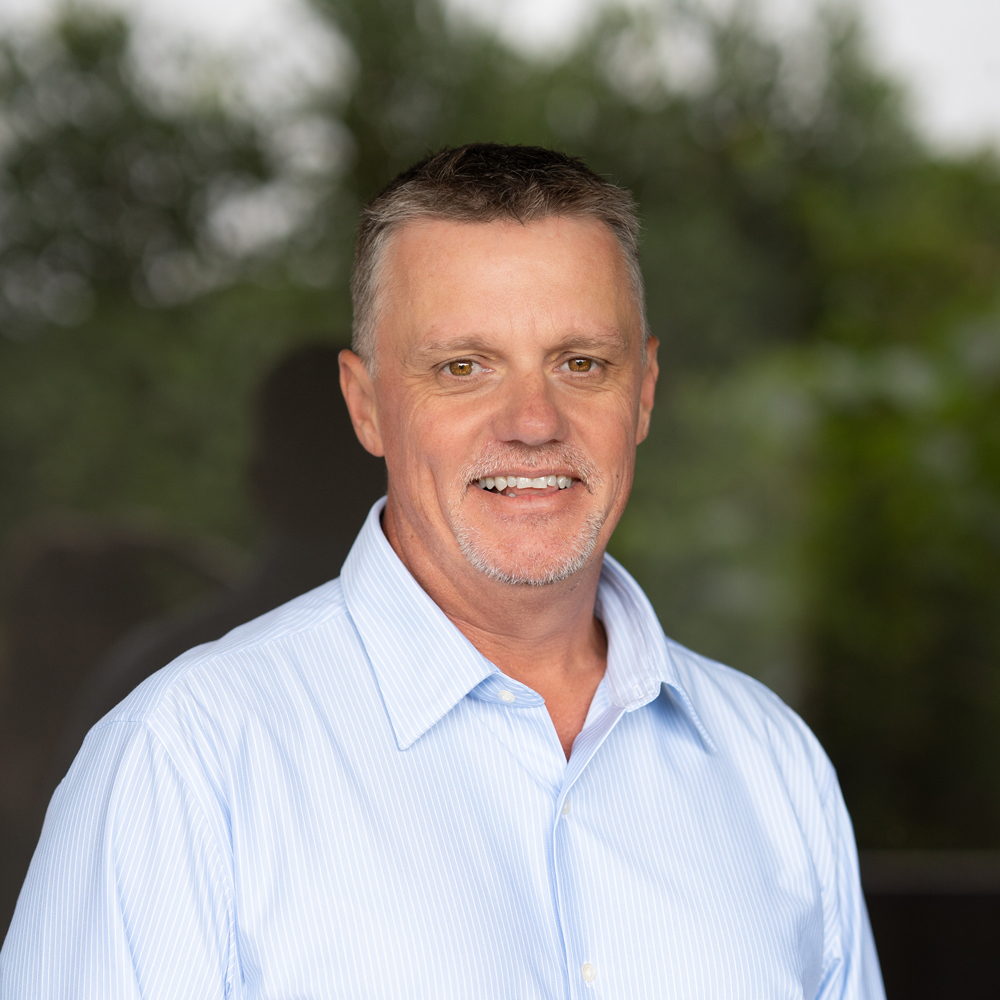
Troy O'Connor is the CEO of Omegro, a global portfolio of Enterprise Asset Management (EAM) software businesses. With more than 25 years in the software industry, he has worked as a consultant, founder, operator and acquirer.
Before leading Omegro, Troy founded and successfully exited a software business before becoming CEO of SmartTrack, which was acquired by Constellation Software in 2017. This experience gives him a unique perspective on both sides of the acquisition journey.
Today, Troy helps software companies scale through long-term ownership, industry specialisation, leadership development and proven operational best practices.

Rob Hallett is a Group Leader at Omegro and former CEO of AssetWorks, a leading provider of Enterprise Asset Management (EAM) software. With more than 20 years of experience in software and EAM, Rob has spent his career helping organisations grow, evolve and navigate change.
After joining AssetWorks through an acquisition in 2008, Rob progressed through a range of leadership roles before becoming CEO and later moving into a group leadership position supporting multiple software businesses. This experience gives him a practical perspective on the acquisition journey from both a leadership and operational standpoint.
STAY IN THE CONVERSATION
Insights worth carrying into the next decision.
You’ve built something great
Come and join the definitive leader for EAM